Mask types for CPAP therapy
Choosing the Right CPAP Mask for Sleep Apnoea Therapy
Starting CPAP therapy for sleep apnoea involves selecting the right mask to ensure effective and comfortable treatment. The two most common types are nasal masks and full-face masks, each designed to deliver the necessary air pressure to keep the airway open during sleep but suited to different needs.
Nasal CPAP Masks
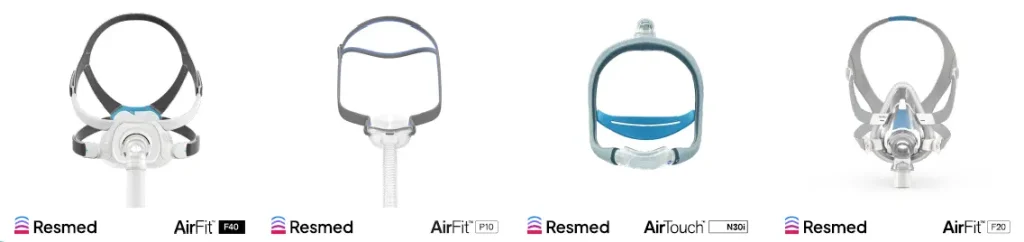
A nasal mask covers only your nose. There are also nasal cushion and nasal pillow styles that sit under or just inside the nostrils. These are the most commonly used CPAP interfaces.
Benefits of Nasal Masks:
- Generally more comfortable and less bulky
- Better seal with fewer air leaks
- Often require lower pressure settings
- Allow more freedom to sleep in different positions
- Many patients find them less claustrophobic
Nasal masks work best when you are able to breathe comfortably through your nose during sleep.
What if I breathe through my mouth?
If you tend to open your mouth at night, air can escape, which reduces the effectiveness of CPAP therapy. In these cases, it is often recommended using a chinstrap along with your nasal mask. A chinstrap gently supports your jaw to help keep your mouth closed, allowing you to continue benefiting from a nasal interface. The preference is to use a nasal mask with a chinstrap when needed because it maintains comfort while still delivering effective therapy.
Full-Face CPAP Masks
A full face mask covers both your nose and your mouth. This design allows air to be delivered through either pathway.
When would we use a full face mask?
Nasal masks are suitable for most patients, while full face masks may be recommended when clinically indicated, such as:
- Persistent mouth breathing that cannot be managed with a chinstrap
- Chronic nasal congestion or obstruction
- Certain facial structures or medical conditions
- Higher pressure settings where mouth leak is difficult to control
Full face masks can be extremely effective, but they are typically larger and may feel heavier or warmer to some patients.
Finding the best mask for You
There is no “one size fits all” solution. The best mask:
- Delivers effective therapy
- Minimizes leaks
- Is comfortable enough to wear all night
Most patients start with a nasal mask due to its comfort and effectiveness. Chinstraps may be added if needed. If nasal masks are not suitable, a full-face mask provides an excellent alternative.
Types of CPAP masks:
Nasal masks are suitable for most patients, while full face masks may be recommended when clinically indicated, such a
The goal is to ensure therapy is both effective and comfortable so you can sleep better and feel better. For any questions or concerns about your mask, contact the Clinic.
Written by James Haiden, our Lead Sleep Scientist. You can meet James at Tugun, in the Sleep Scientist Clinic.